Professional Sparger Pipe and Sparger Tube OEM Solution Supplier
Industrial sparger pipes are perforated porous metal tubes designed to introduce gas into liquids for aeration, agitation,
and mass transfer processes.
For Now, they are widely used in water treatment tanks, chemical reactors, fermentation systems, bioreactors, and
mixing vessels where medium-to-large bubble aeration is required.
Compared with sintered porous spargers, sparger pipes provide a cost-effective, robust, and easy-to-clean solution for
applications that do not require micro-bubble dispersion.
HENGKO supplies fully customizable sparger pipes with various hole patterns, materials, diameters, lengths,
and connection styles to fit your process conditions.
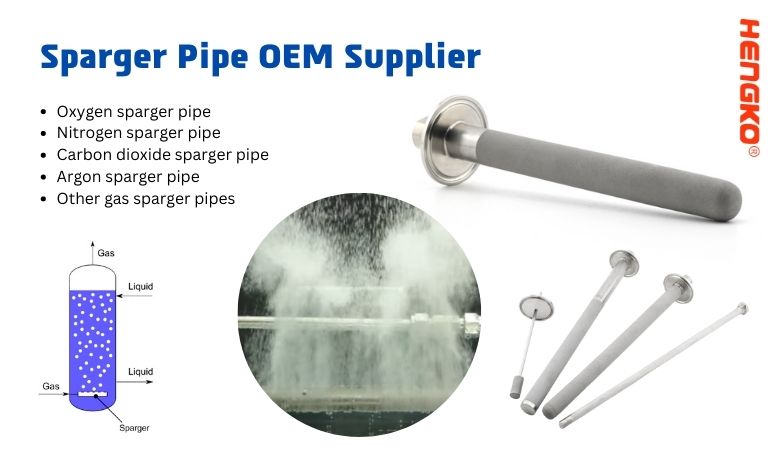
Sintered Metal Sparger Pipe Solution Manufacturer
HENGKO is a leading manufacturer of Sparger Pipes, providing custom Special Sparger Tube solutions for a wide range
of industrial applications and devices.
Our team of experts has extensive experience in the field and is equipped to provide high-quality Sparger Pipes that are
tailored to meet the specific needs of each client.
Our Sintered Sparger Tube are made using advanced sintering techniques that result in a highly porous metal structure,
allowing for efficient gas distribution and mixing.
This design makes them ideal for use in a variety of applications, including bioreactors, fermenters,
and other gas-liquid mixing systems.

HENGKO delivers Sparger Tubes engineered to your exact requirements
—standard or custom.
With proven sintering expertise and reliable service, we are the preferred partner for industrial Sparger systems.
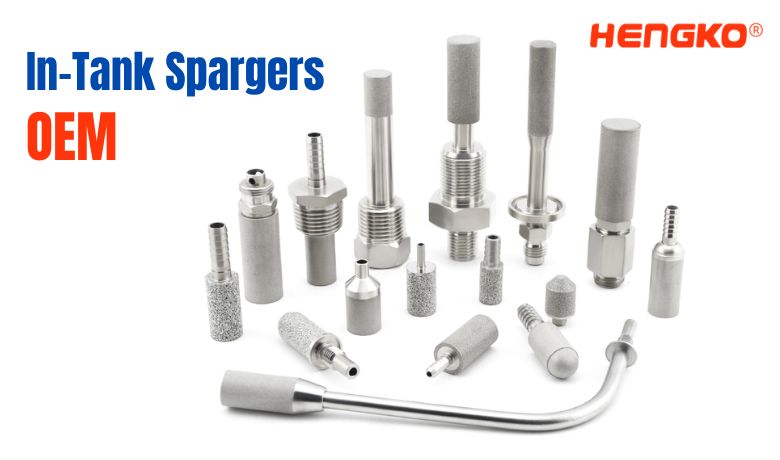
OEM Sparger Tube for Your Special Applications :
Types of Sparger Pipes(Custom Designs for Different Processes)
Based on the Type of Gas Introduced:
3. Carbon dioxide
4. Argon sparger tube
5. Other gas sparger pipes
Based on the Shape or Design:
1. Straight Pipe Sparger
*Most common type
*Simple installation
*Suitable for tanks, reactors, mixing vessels
2. U-Type Sparger
*Increases bubble coverage length
*Ideal for rectangular tanks or channels
3. Ring Sparger
*360° distribution
*Ideal for fermentation tanks, bioreactors, food/beverage processing
4. Multi-Arm Sparger (Spider Type)
*For large tanks requiring wide dispersion
*Provides balanced aeration across the bottom
5. Flanged or Threaded Connection Spargers
*For high-pressure environments
*Easy installation and maintenance
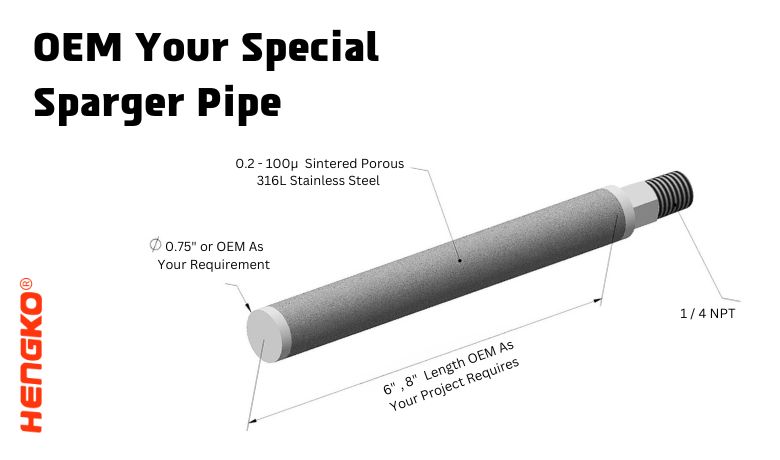
Each sparger pipe can be customized for length, diameter, hole size, connection type, and material.
If you have any questions about our Sparger Pipes or are interested in receiving a quote,
please don't hesitate to contact us at ka@hengko.com or click the following button to send us an inquiry.
We will respond to your request within 24 hours.
-
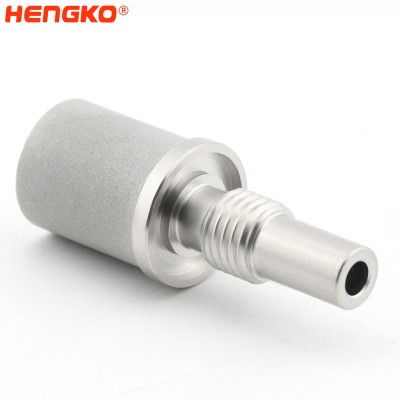
big batches hydrogen permeation micro bubble ozone sparger diffuser for diy home brewin...
1. Better Than Shaking a Keg! 2. Are you tired of carbonating your beer the unpredictable way? You crank up the PSI in the keg, shake, and wait with ...
View Detail -
Porous metal process filters, micro spargers for hydrogenated oil manufacturing
Product Description Sintered air stone diffusers are often used for porous gas injecting. They have different pore sizes(0.5um to 100um) allowing small bub...
View Detail
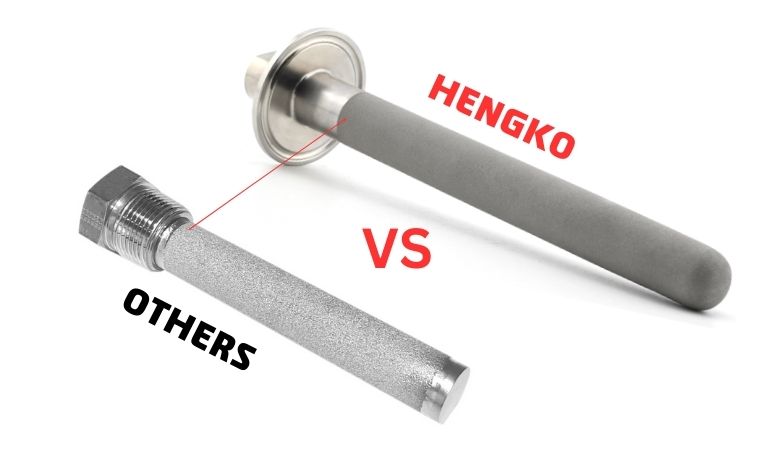
What Is a Sparger Pipe?
As Above information, actually, we can know a sparger pipe is a gas distribution device typically made from
stainless steel tubing with precision-drilled perforations.
When compressed air, nitrogen, oxygen, CO₂, or other gases enter the pipe, they exit through the holes and form
bubbles in the surrounding liquid.
These bubbles create mixing, agitation, aeration, or gas–liquid mass transfer depending on the application.
Sparger pipes are preferred in tanks and reactors that require:
*High gas flow rates
*Large bubble size
*Resistance to corrosion and pressure
*Simple structure and low maintenance
*Easy cleaning and sanitation
Because sparger pipes have larger bubble sizes than porous spargers, they are ideal for general aeration
and industrial agitation applications where fine dispersion is not required.
How Sparger Pipes Work(Working Principle)
A sparger pipe operates on the simple principle of perforated-tube aeration:
1. Gas enters the sparger tube through an inlet or manifold
2. Internal pressure forces the gas through precision-drilled holes
3. Bubbles are released into the liquid
4. Rising bubbles create agitation, circulation, and oxygen transfer
5. The pattern and size of the holes determine bubble size and distribution
Key Factors Influencing Performance
| Parameter | Effect on Performance |
|---|---|
| Hole Diameter | Larger holes → larger bubbles → lower dispersion efficiency but higher flow capacity |
| Hole Spacing | Affects gas distribution uniformity |
| Tube Diameter | Influences pressure drop and flow rate |
| Gas Flow Rate | Higher flow → stronger agitation but larger bubbles |
| Installation Position | Depth affects backpressure and bubble retention time |
HENGKO engineers can design the hole pattern to optimize the bubble pattern for your tank or bioreactor geometry.
Main Features of Sparger Pipe
A sparger pipe is a type of pipe used in a variety of industrial applications, particularly in the chemical and petrochemical industries.
It is main used for the injection of gas into a liquid, typically to facilitate a chemical reaction or for other process requirements.
As following are some of the features of a sparger tube, please check it.
1. Material:
Sparger pipes are typically made from stainless steel or other corrosion-resistant materials.
This is important because they are often used with aggressive chemicals and must withstand harsh operating conditions.
2. Design:
The design of a sparge pipe is critical to its effectiveness.
It typically includes a series of small holes or perforations along the length of the pipe to allow gas to escape and disperse into the liquid.
The spacing and size of the holes can be customized based on the specific process requirements.
3. Size:
The size of a sparger pipe can vary depending on the application, but they are generally smaller in diameter than other types of pipes used in the same process.
This is because the gas injected through the sparger tube must be finely dispersed into the liquid for optimal results.
4. Connection:
Sparger pipes can be connected to a variety of other equipment and piping systems.
They may be threaded, welded, or connected with flanges, depending on the requirements of the process.
5. Cleaning:
Because sparger pipes are used in processes involving chemicals and other materials, they must be regularly cleaned to prevent buildup and corrosion.
They can be cleaned with mechanical means, such as brushing or blasting, or with chemical solutions.
Overall, sparger tubes play a critical role in many industrial processes, and their design and construction must be
carefully tailored to each specific application to ensure optimal performance and efficiency.
Sparger Pipe Classify
Sintered metal sparger pipes can be classified based on various criteria.
Here are some possible classifications:
Based on the Type of Gas Introduced:
*Carbon dioxide
*Argon
*Other gas sparger pipes
Based on the Shape or Design:
*Straight design
*U-shaped pipe
*Coiled tube
*Other shaped pipes
Based on the Porosity:
*Low porosity sparger tube (less than 30%)
*Medium porosity pipe (30-50%)
*High porosity sparge pipe (more than 50%)
Based on the Application:
*Wastewater treatment sparger pipe
*Fermentation sparger tube
*Chemical processing sparge pipe
*Pharmaceutical production sparger pipe
*Other industrial sparger system
Based on the Materials:
*Stainless steel sparger pipe
*Hastelloy sparger tube
*Inconel sparge pipe
*Other alloy sparger pipes
Note that these classifications are not exhaustive and other criteria
can also be used to classify sintered metal sparger pipes.
Engineering Design Parameters(Technical Specifications)
Sparger pipes must be engineered based on your gas type, pressure, liquid properties, and tank geometry.
Typical Engineering Parameters
| Parameter | Range / Specification |
|---|---|
| Hole Diameter | 0.5–3.0 mm (depending on bubble size) |
| Hole Spacing | 5–20 mm |
| Tube OD | 6–60 mm |
| Working Pressure | 0.1–0.6 MPa |
| Working Temperature | −20°C to 300°C |
| Material Options | SS304, SS316L, 904L, Titanium, Hastelloy |
| Connection Types | Welded ends, NPT thread, Tri-Clamp, Flange |
Available Manufacturing Processes
*Laser drilling
*CNC machining
*TIG orbital welding
*Pickling & passivation
*Food-grade polishing
Provide your required specifications and our engineers will design an optimized sparger system.
Sparger Pipe vs. Porous Sintered Sparger(Comparison)
Maybe till now, you heard sparger pipe and also porous sparger, then think you will one question, what is different ?
Choosing between a perforated sparger pipe and a sintered porous sparger depends on your aeration requirements.
Below is a clear engineering comparison:
| Feature | Sparger Pipe (Perforated Tube) | Porous Sintered Sparger |
|---|---|---|
| Bubble Size | 1–5 mm (large bubbles) | 20–200 µm (microbubbles) |
| Mass Transfer Efficiency | Medium | Very High |
| Gas Flow Capacity | High | Medium |
| Pressure Drop | Low | Medium |
| Cleanability | Very Easy | Requires backflush / CIP |
| Cost | Low | Medium / High |
| Applications | Water tanks, general aeration, mixing | Fermentation, bioreactors, precision aeration |
| Typical Materials | 304/316L stainless steel | 316L / Titanium / Nickel alloys |
When to Choose Sparger Pipe
*You need medium-to-large bubbles
*You require high flow capacity
*Your process doesn’t need micro-bubble oxygen transfer
*You need a lower-cost aeration solution
*You require easy cleaning (CIP-friendly)
When to Choose Porous Sparger
*You require high oxygen transfer efficiency
*You need microbubbles for fermentation / biotech
You need precise gas control
Applications of Sparger Pipes
Sparger pipes are used across a wide range of industrial and scientific processes.
1. Water & Wastewater Treatment
*Aeration
*Oxygenation
*Biological treatment tanks
2. Fermentation & Bioprocessing
*Mixing
*Agitation
*Degassing
3. Chemical Processing
*Reactor agitation
*Gas–liquid reactions
*Stripping & absorption
4. Food & Beverage Production
*Carbonation
*Oxygen removal
*Controlled aeration
5. Environmental Engineering
*Air stripping
*Odor control
*Aquaculture aeration
6. Pharma & Laboratory Use
*Small bioreactors
*Pilot reactors
*R&D mixing systems
FAQ – Sparger Pipe
Q1: What bubble size does a sparger pipe produce?
Typically 1–5 mm, depending on hole diameter and gas pressure.
Q2: How do I choose the right hole size?
Larger holes create larger bubbles suitable for general aeration.
Smaller holes give better dispersion but higher pressure drop.
Q3: Can sparger pipes be used for fermentation?
Yes, but for high oxygen transfer efficiency, porous sintered spargers are recommended.
Q4: What materials are best for corrosive chemicals?
316L, 904L, Titanium, or Hastelloy depending on the medium.
Q5: Do you support OEM manufacturing?
Yes, all dimensions and patterns can be customized based on your reactor/tank design.
Contact HENGKO for Sparger Pipe Solutions
Looking for a reliable sparger pipe manufacturer?
Contact HENGKO for engineering support, CAD design, and OEM manufacturing ka@hengko.com


