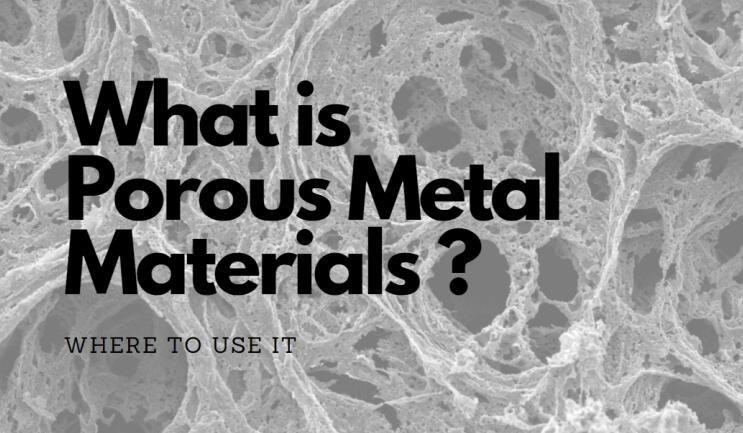
Porous metal is an engineered metallic material containing a controlled network of pores or voids inside its structure. In open-pore porous metals, these pores are interconnected, allowing gases or liquids to pass through while the metal retains much of its mechanical strength and temperature resistance.
Porous metals are commonly manufactured from stainless steel, bronze, nickel, titanium, aluminum, and other alloys for industrial filtration, gas diffusion, flow restriction, pressure equalization, sensor protection, and fluid distribution.
Unlike conventional solid metals, porous metals combine the properties of a structural material with those of a functional fluid-control medium. This makes them useful in industrial systems where filtration, controlled permeability, strength, corrosion resistance, or high-temperature performance are required.
•Solid metal mainly provides structural strength.
•Porous metal provides structural strength plus a controlled network of pores.
•Open-pore metal allows gas or liquid to flow through the material.
•Closed-pore metal contains isolated voids and is more commonly used for lightweight or energy-absorbing structures.
What Metals Are Porous?
Most engineering metals are not naturally porous in their conventional solid form. Instead, they are manufactured into porous structures using controlled processes such as powder forming and sintering, metal foaming, or other specialized techniques.
Common metals and alloys used to produce porous components include:
•Stainless steel
•Bronze
•Nickel
•Nickel alloys
•Titanium
•Aluminum
•Iron
| Material | Main Characteristics | Typical Applications |
|---|---|---|
| Stainless Steel 316L / 316 / 304 | Corrosion resistant, strong, cleanable, temperature resistant | Filtration, gas diffusion, sensor protection, flow control |
| Bronze | Good permeability, economical, easy to manufacture | Pneumatic silencers, lubrication, compressed-air filtration |
| Nickel | Good chemical and thermal resistance | Chemical processing, batteries, high-temperature filtration |
| Nickel Alloys | High corrosion and temperature resistance | Harsh chemical and high-temperature environments |
| Titanium | Lightweight, corrosion resistant, biocompatible | Chemical processing, water treatment, medical applications |
| Aluminum | Low density; high porosity can be achieved | Heat transfer, acoustic control, energy absorption |
| Iron | Economical with good mechanical strength | General industrial and structural applications |
The most appropriate material depends on more than pore size. Engineers should also consider operating temperature, pressure, corrosion environment, fluid compatibility, mechanical load, cleaning method, and required service life.
Is Stainless Steel a Porous Metal?
Solid stainless steel is not naturally porous, but stainless steel can be manufactured into a controlled porous structure.
One of the most common methods is powder metallurgy. Stainless steel powder with a selected particle-size distribution is formed into a required shape and then sintered at high temperature.
During sintering, adjacent metal particles bond together while controlled interconnected spaces remain between them. The result is a rigid porous stainless steel structure through which gas or liquid can flow.
This is why industrial products are often described using terms such as:
•Porous stainless steel
•Sintered stainless steel
•Stainless steel porous filter
•Sintered metal filter
•Porous metal filter
For industrial filtration and fluid-control applications, 316L stainless steel is especially common because it offers a useful combination of corrosion resistance, mechanical strength, temperature resistance, weldability, and cleanability.
What Is Sintered Porous Metal?
Sintered porous metal is produced by forming metal powder and heating it under controlled conditions so that the individual particles bond together while a network of pores remains inside the material.
The objective is not to melt the metal powder into a completely dense solid. Instead, the particles bond at their contact points while controlled void spaces remain between them.
Several factors influence the final pore structure and performance:
•Metal powder particle size
•Particle-size distribution
•Powder morphology
•Forming pressure
•Sintering temperature
•Sintering time
•Component geometry
•Secondary machining or welding
By controlling these parameters, manufacturers can produce porous metal components with different permeability, mechanical strength, filtration characteristics, and pressure-drop performance.
Open-Pore vs. Closed-Pore Porous Metal
Open-Pore Porous Metal
In an open-pore structure, many of the internal pores are interconnected. Gas or liquid can therefore travel through the porous network.
Open-pore porous metals are commonly used for:
•Industrial filtration
•Gas diffusion
•Sparging
•Flow restriction
•Pressure equalization
•Sensor protection
•Pneumatic silencing
•Fluid distribution
Sintered powder metal filters are normally designed around this type of interconnected pore structure.
Closed-Pore Porous Metal
In a closed-pore structure, the internal voids are isolated from each other and do not create a continuous fluid path through the material.
Closed-pore metal structures are more commonly used where low density, impact absorption, thermal insulation, vibration damping, or structural performance is important.
Metal foams are a typical example.
What Is the Difference Between Pore Size, Porosity and Permeability?
These three terms are closely related, but they describe different characteristics of porous metal.
Pore Size
Pore size describes the dimensions of the openings within the porous structure.
For filtration applications, pore characteristics strongly influence which particles can be retained and how easily gases or liquids pass through the component.
Important: a stated pore size should not automatically be treated as identical to an absolute filtration rating. Filtration performance also depends on pore-size distribution, material thickness, pore geometry, test method, and the overall filtration mechanism.
Porosity
Porosity describes how much of the total volume of a material consists of void space. It is usually expressed as a percentage.
Higher porosity can increase the amount of open volume available for fluid flow, but porosity alone does not determine filtration efficiency or permeability.
Permeability
Permeability describes how easily a gas or liquid can flow through the interconnected pore network.
Two porous metal components can have similar porosity but very different permeability because their pore geometry, thickness, tortuosity, and pore connectivity may be different.
Flow rate, allowable pressure drop, material thickness, operating pressure, fluid properties, geometry, and filtration requirements should also be evaluated.
What Are Examples of Porous Materials?
Porous materials exist in many material families, not only metals.
1.Sintered stainless steel
2.Sintered bronze
3.Porous titanium
4.Nickel-based porous metal
5.Metal foam
6.Porous ceramics
7.Activated carbon
8.Porous polymers
9.Natural stone
10.Porous glass
For industrial applications involving high temperature, pressure, mechanical loads, aggressive chemicals, or repeated cleaning, porous metals can provide advantages over many polymer-based porous materials.
Is Aluminum a Porous Metal?
Conventional aluminum is not naturally porous, but aluminum can be manufactured into porous aluminum or aluminum foam using specialized processes.
Porous aluminum is attractive where low density, impact absorption, acoustic performance, energy absorption, or heat transfer are more important than fine filtration capability.
For chemically demanding industrial filtration and fluid-control applications, stainless steel, nickel alloys, or titanium are often selected instead, depending on the operating environment.
What Material Has the Highest Porosity?
There is no single metal that can simply be described as having the “highest porosity” in every application.
Achievable porosity depends on both the material and the manufacturing process. In practical engineering applications, maximum porosity is rarely the only objective.
A better engineering question is:
Which porous material provides the best combination of pore structure, permeability, strength, corrosion resistance, temperature resistance, and filtration performance for the application?
Sintered Stainless Steel Porous Metal
Sintered stainless steel is one of the most widely used porous metals for industrial filtration and fluid management.
Its main advantages include:
•Controlled porous structure
•Good mechanical strength
•Corrosion resistance
•Oxidation resistance
•Temperature resistance
•Pressure resistance
•Reusable and cleanable construction
•Machinability
•Weldability
•Customizable dimensions and shapes
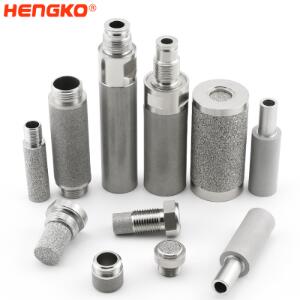
Common forms include:
•Porous discs
•Tubes
•Cups
•Cylinders
•Plates
•Cartridges
•Threaded filter elements
•Sensor protection housings
•Gas diffusers
•Pneumatic silencers
•Custom OEM porous parts
Why Is 316L Stainless Steel Commonly Used?
316L stainless steel is frequently selected for porous metal components because its molybdenum-containing composition provides improved corrosion resistance compared with many general-purpose stainless steels.
Its low carbon content also makes it suitable for many welded assemblies.
Typical applications include:
•Process gas filtration
•Compressed air systems
•Chemical processing
•Water treatment
•Industrial instrumentation
•Laboratory equipment
•Food and beverage equipment
•Pharmaceutical equipment
•Environmental monitoring
•Industrial sensor protection
Material compatibility should always be checked against the operating fluid, chemical concentration, temperature, pressure, and cleaning process.
Porous Titanium
Porous titanium combines a controlled porous structure with the inherent characteristics of titanium, including:
•Low density
•High specific strength
•Corrosion resistance
•Biocompatibility
It can be used in chemical processing, water treatment, gas distribution, electrolytic systems, medical applications, and other specialized environments.
Compared with stainless steel, titanium is normally selected when its corrosion resistance, weight, or biocompatibility provides a meaningful technical advantage.
Porous Nickel and Nickel Alloys
Nickel-based porous materials are useful in applications that require temperature resistance, chemical resistance, electrical properties, or electrochemical performance.
Typical applications can include:
•High-temperature filtration
•Chemical processing
•Electrodes
•Gas distribution
•Corrosive-fluid filtration
•Petrochemical processing
Nickel alloys such as Monel and other specialty alloys may be considered where standard stainless steel does not provide sufficient chemical or thermal resistance.
Sintered Bronze Porous Metal
Sintered bronze porous material is widely used in pneumatic and lubrication systems.
Its advantages include:
•Good permeability
•Relatively economical manufacturing
•Suitability for small porous components
Common applications include:
•Pneumatic silencers
•Compressed-air filtration
•Oil filtration
•Lubrication systems
•Gas distribution
•Small porous filter elements
Stainless steel is generally preferred when the application requires higher corrosion resistance, cleanliness, temperature resistance, or mechanical strength.
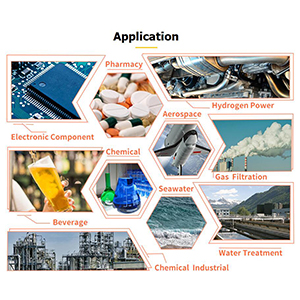
What Are Porous Metals Used For?
The combination of a rigid metal structure and controlled interconnected pores allows porous metal to perform functions that conventional solid metal cannot.
1. Industrial Filtration
Porous metal filters can remove solid contaminants from gases and liquids while maintaining a strong and dimensionally stable filter structure.
Applications include:
•Process gas
•Compressed air
•Chemicals
•Steam
•Oil
•Water
•Other industrial process fluids
2. Gas Diffusion and Sparging
Gas can pass through numerous interconnected pores and form distributed bubbles at the surface of the porous component.
This principle is used in aeration, oxygenation, carbonation, fermentation, ozone diffusion, and gas-liquid mass-transfer processes.
Related product: porous metal gas diffusers and carbonation stones.
3. Sensor Protection
Porous stainless steel housings can protect sensitive sensing elements while allowing the surrounding gas or atmosphere to reach the sensor.
Typical applications include:
•Humidity sensors
•Industrial temperature and humidity transmitters
•Dew-point instruments
•Gas sensors
•Environmental monitoring instruments
The porous housing can help protect the sensing element from particles, mechanical contact, and other environmental contaminants.
4. Flow Restriction
A controlled porous structure creates resistance to fluid flow. Porous metal can therefore be used as a passive flow restrictor or damping element in gas and liquid systems.
5. Pressure Equalization and Venting
Porous metal vents allow gases to pass while providing particle protection and mechanical strength.
They can be integrated into enclosures, instruments, pneumatic systems, and industrial equipment.
6. Pneumatic Silencing
When compressed gas is discharged through a porous structure, the flow is distributed through many small flow paths. This can reduce exhaust noise from pneumatic equipment.
7. Fluid Distribution
Porous metal can distribute gas or liquid over a larger surface area instead of discharging it through one concentrated opening.
This is useful in sparging, gas distribution, fluidized systems, and specialized process equipment.
Porous Metal vs. Wire Mesh
| Feature | Sintered Powder Porous Metal | Wire Mesh |
|---|---|---|
| Structure | Three-dimensional interconnected pore network | Woven or layered metal wires |
| Shape Flexibility | Excellent for compact and complex components | Well suited to sheets and cylindrical screens |
| Mechanical Rigidity | Generally high | Depends on wire diameter and mesh construction |
| Flow Path | Tortuous three-dimensional path | More direct openings |
| Small Custom Parts | Very suitable | More limited for some complex geometries |
| Welding / Integration | Good | Good |
| Reusability | Good | Good |
Neither technology is universally better. Selection depends on filtration requirement, flow rate, differential pressure, geometry, mechanical load, and cleaning method.
Porous Metal vs. Porous Ceramic
Porous ceramics can provide excellent high-temperature and chemical resistance.
Porous metal, however, generally offers better toughness and resistance to mechanical shock. Metal components can also be easier to weld, machine, thread, and integrate into metallic assemblies.
For applications involving vibration, pressure cycling, mechanical impact, or complex metallic connections, these characteristics can make sintered metal advantageous.
How Do You Select a Porous Metal Material?
Selection should start with the application rather than with a micron number alone.
Before specifying a porous metal component, consider:
•Material: What gas or liquid contacts the component?
•Filtration requirement: What particle size must be controlled?
•Flow rate: How much gas or liquid must pass through?
•Pressure drop: How much resistance can the system tolerate?
•Operating pressure: What differential pressure will the part experience?
•Temperature: What are the normal and maximum operating temperatures?
•Dimensions: What diameter, length, wall thickness, and geometry are required?
•Connection: Thread, flange, weld, press fit, or another interface?
•Cleaning: Backwash, ultrasonic cleaning, chemical cleaning, or replacement?
•Quantity: Prototype, small batch, or production volume?
Providing these parameters allows a porous metal manufacturer to evaluate material grade, pore structure, dimensions, flow performance, and production process more accurately.
Can Porous Metal Parts Be Custom Manufactured?
Yes. Sintered powder metallurgy is particularly suitable for manufacturing custom porous metal components in many different geometries.
Customizable parameters can include:
•Outside diameter
•Inside diameter
•Length
•Wall thickness
•Material grade
•Pore or filtration specification
•Threaded connections
•Welded fittings
•Flanges
•End caps
•Special housings
•Integrated metal structures
For OEM projects, providing a technical drawing together with actual operating conditions is much more useful than specifying only a micron rating.
Material: SS316L
Shape: Porous Tube
OD × ID × Length: 20 × 15 × 100 mm
Filtration Requirement: 10 μm
Fluid: Compressed Air
Operating Pressure: 10 bar
Temperature: 80°C
Required Flow: 25 L/min
Annual Quantity: 500 pcs
This gives the manufacturer much more engineering context than simply requesting a “10-micron porous tube.”
Frequently Asked Questions About Porous Metal
What is porous metal?
Porous metal is an engineered metallic material containing pores or void spaces. In open-pore structures, the pores are interconnected so gases or liquids can flow through the material.
What metals can be made porous?
Stainless steel, bronze, nickel, nickel alloys, titanium, aluminum, iron, and several other metals can be manufactured into porous structures.
Is stainless steel naturally porous?
No. Conventional stainless steel is a dense, non-porous material. Porous stainless steel is manufactured using processes such as powder forming and high-temperature sintering.
What is sintered porous metal?
Sintered porous metal is produced by forming metal powder and heating it under controlled conditions so the particles bond together while a network of interconnected pores remains in the material.
What is porous stainless steel used for?
Typical uses include:
•Industrial filtration
•Gas diffusion
•Sparging
•Flow restriction
•Pneumatic silencing
•Sensor protection
•Pressure equalization
•Fluid distribution
Is aluminum a porous metal?
Standard aluminum is not naturally porous, but it can be manufactured into porous aluminum or aluminum foam for specialized applications.
What material has the highest porosity?
There is no single porous metal with the highest useful porosity in all applications. Achievable porosity depends on the material and manufacturing process, while permeability, strength, temperature resistance, and corrosion resistance also need to be considered.
Is higher porosity always better?
No. Higher porosity may improve flow characteristics, but it can also affect mechanical strength and other properties. The optimum porosity depends on the application.
Is pore size the same as filtration rating?
Not necessarily. Pore size describes characteristics of the internal structure, while filtration performance depends on the complete pore network, thickness, pore-size distribution, test method, and filtration mechanism.
Watch: How Sintered Metal Filters Work
Need a Custom Porous Metal Component?
HENGKO manufactures sintered porous metal components for filtration, gas diffusion, flow control, sensor protection, pneumatic systems, and other industrial applications.
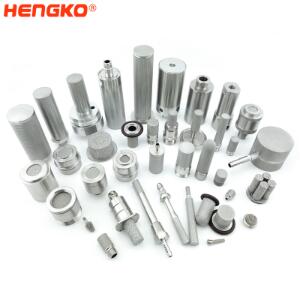
Available configurations include:
•Porous discs
•Tubes
•Cylinders
•Cups
•Cartridges
•Sensor housings
•Diffusers
•Silencers
•Custom OEM components
For a technical evaluation, please provide:
•Material
•Drawing or dimensions
•Pore / filtration requirement
•Operating fluid
•Flow requirement
•Pressure
•Temperature
•Connection type
•Required quantity
Our engineering team can evaluate your requirements and recommend a suitable porous metal structure for your application.

Post time: Sep-16-2022


