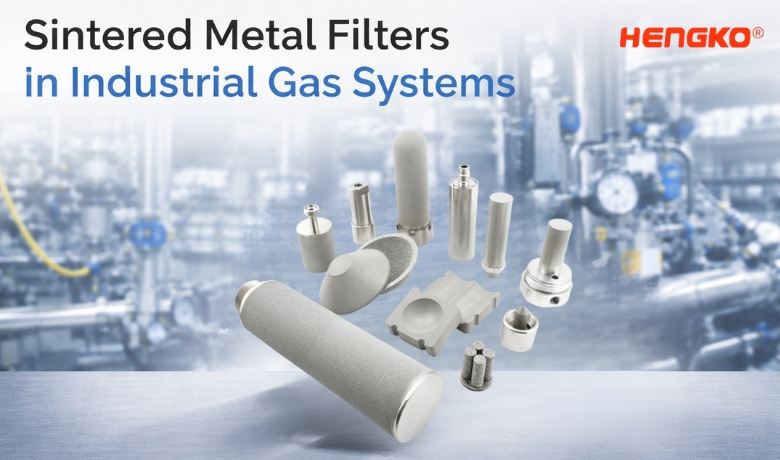
Introduction: The Challenge of Gas Purity in Industrial Systems
Industrial gas systems play a critical role in compressed air, process gas, and instrument air applications, where gas purity directly impacts system reliability and performance. Even minor contamination can lead to equipment wear, inaccurate measurements, and operational instability.
Common contaminants such as solid particles, oil mist, moisture, and debris can cause valve blockage, sensor fouling, corrosion, and premature component failure. These issues increase maintenance requirements and raise the risk of unexpected downtime.
In harsh industrial environments—characterized by high pressure, elevated temperatures, corrosive gases, and continuous operation—maintaining consistent gas cleanliness becomes particularly challenging. Traditional filter media, including fiber or polymer-based filters, often lack the mechanical strength and thermal stability required for long-term use under such conditions.
As industrial processes demand higher reliability and tighter control, more robust and stable filtration solutions are increasingly required to ensure consistent gas purity.
What Are Sintered Metal Filters?
Sintered metal filters are porous filtration components produced by sintering fine metal powders under controlled temperature and pressure. During this process, metal particles bond together without fully melting, forming a rigid structure with interconnected pores.
How Sintered Metal Filters Are Made
The sintering process allows precise control over pore size and porosity, resulting in consistent and repeatable filtration performance. By adjusting powder size, compaction pressure, and sintering conditions, manufacturers can achieve specific micron ratings tailored to industrial gas applications.
Typical materials used for sintered metal filters include 316L stainless steel for corrosion resistance and mechanical strength, bronze for cost-effective applications, and nickel alloys for high-temperature or chemically aggressive environments.
How They Work in Gas Filtration
Unlike surface filters that trap particles only on the outer layer, sintered metal filters operate through depth filtration. Contaminants are captured throughout the porous structure, allowing higher dirt-holding capacity and more stable flow characteristics.
Because the pore structure is formed from solid metal bonds, sintered metal filters maintain a stable filtration rating even under high pressure, elevated temperatures, and fluctuating flow conditions. This structural stability makes them particularly suitable for demanding industrial gas systems where consistent performance is required.
Key Challenges in Industrial Gas Systems
Industrial gas systems often operate under demanding conditions that place significant stress on filtration components. These challenges make reliable gas filtration a critical, yet complex, engineering task.
High Pressure and Flow Fluctuations
Many industrial gas systems run at elevated pressures with varying flow rates. Sudden pressure changes or flow surges can deform or damage conventional filter media, leading to reduced filtration efficiency or premature failure. Maintaining structural integrity under such conditions is essential for consistent system performance.
High Temperature Environments
Gas streams in industrial processes are frequently exposed to high operating temperatures. Elevated temperatures can weaken polymer-based filters, alter pore structures, and accelerate material degradation. Filtration solutions must remain dimensionally stable to ensure long-term reliability.
Corrosive or Reactive Gases
Certain industrial gases are chemically aggressive or reactive. Exposure to these media can cause corrosion, material fatigue, or chemical incompatibility in standard filter materials, compromising both filtration performance and system safety.
Continuous Operation and System Reliability Requirements
Industrial gas systems often run continuously with minimal downtime. Frequent filter replacement or unexpected failure can disrupt operations and increase maintenance costs. As a result, filtration components must deliver stable performance over extended service intervals while supporting overall system reliability.
Why Sintered Metal Filters Are Ideal for Industrial Gas Systems
Sintered metal filters are specifically designed to address the demanding conditions found in industrial gas systems. Their unique structure and material properties provide a combination of strength, stability, and reliability that conventional filter media often cannot achieve.
-Excellent Mechanical Strength Under High Pressure
Sintered metal filters form a rigid, self-supporting structure through solid metal bonds. Unlike fiber or polymer-based media, they do not collapse or deform under high differential pressure. This makes them well suited for high-pressure gas lines where mechanical stability is essential for maintaining consistent filtration performance.
-High Temperature Resistance
Metal-based filter structures retain their integrity at elevated temperatures where polymer or composite filters may soften, shrink, or degrade. This thermal stability allows sintered metal filters to deliver reliable performance in hot gas streams and high-temperature industrial environments.
-Chemical and Corrosion Resistance
By selecting appropriate materials such as 316L stainless steel or nickel alloys, sintered metal filters can withstand exposure to corrosive or reactive industrial gases. This resistance helps prevent material degradation, ensures filtration integrity, and supports safe long-term operation in chemically aggressive applications.
-Precise and Stable Filtration Accuracy
The controlled pore structure of sintered metal filters provides a consistent and repeatable micron rating. Because the pores are fixed within a solid metal matrix, filtration accuracy remains stable even under pressure fluctuations and temperature changes, ensuring reliable particle retention over time.
-Long Service Life and Reusability
Sintered metal filters are designed for extended service life. They can be cleaned through backflushing, ultrasonic cleaning, or chemical methods, restoring filtration performance without replacement. This reusability reduces maintenance frequency and contributes to a lower total cost of ownership (TCO) for industrial gas systems.
5-Typical Industrial Gas Applications Using Sintered Metal Filters
Thanks to their mechanical strength, thermal stability, and consistent filtration performance, sintered metal filters are widely used across a range of industrial gas applications where reliability is critical.
1.Compressed Air Systems
In compressed air systems, sintered metal filters are commonly used to remove solid particles, oil aerosols, and condensate droplets from the gas stream. Their rigid structure withstands pressure fluctuations and continuous operation, helping protect downstream pneumatic equipment, valves, and actuators while maintaining stable airflow.
2.Process Gas Filtration
Process gases used in manufacturing and chemical processing often require precise particulate control to ensure product quality and process stability. Sintered metal filters provide reliable particle retention under high pressure and temperature conditions, making them suitable for continuous process gas filtration in demanding industrial environments.
3.Instrument Air and Analyzer Protection
Sensitive instruments such as pressure transmitters, flow meters, and gas analyzers rely on clean, dry gas for accurate measurement. Sintered metal filters are frequently installed upstream of these devices to prevent contamination-related damage, signal drift, or measurement errors, ensuring long-term reliability of analytical systems.
4.Nitrogen, Hydrogen, and Inert Gas Systems
High-purity gases such as nitrogen, hydrogen, and inert gases require filtration solutions that do not shed fibers or introduce secondary contamination. Sintered metal filters offer stable filtration performance and material compatibility, supporting purity requirements and safe operation in critical gas supply systems.
5.Gas Distribution Manifolds and Pipelines
In gas distribution networks, filters must endure continuous flow, vibration, and varying operating conditions. Sintered metal filters are often integrated into manifolds and pipelines to provide consistent particulate control while minimizing maintenance and pressure drop across the system.
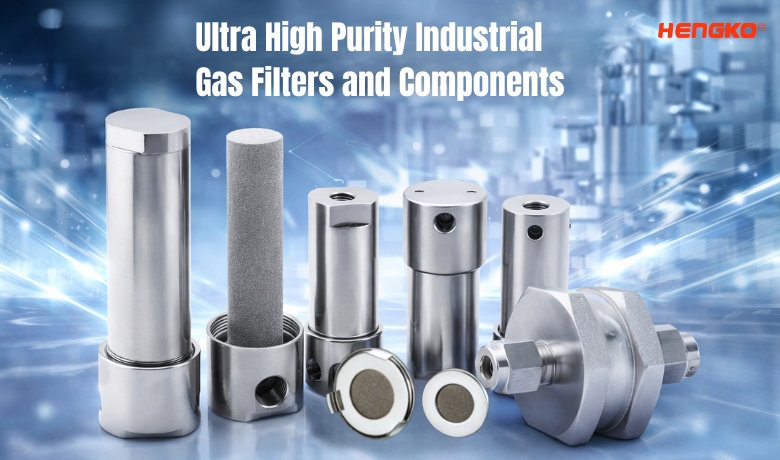
Sintered Metal Filters vs Other Gas Filter Types
Selecting the appropriate gas filter depends on operating conditions, performance requirements, and maintenance expectations. Different filter types offer distinct advantages and limitations in industrial gas applications.
-Sintered Metal Filters vs Fiber or Paper Filters
Fiber or paper filters are commonly used in low-pressure and general-purpose applications due to their low cost and high initial filtration efficiency. However, these media are sensitive to moisture, pressure fluctuations, and mechanical stress. In industrial gas systems, they may deform, tear, or lose filtration performance over time.
Sintered metal filters, by contrast, maintain structural integrity under high pressure and continuous operation. Their rigid pore structure allows consistent filtration performance in environments where fiber-based media may not be suitable.
-Sintered Metal Filters vs Polymer Cartridge Filters
Polymer cartridge filters offer good chemical compatibility for certain gases and are widely used in moderate-temperature applications. However, exposure to high temperatures or prolonged pressure can cause polymer materials to soften, creep, or degrade, affecting filtration accuracy and service life.
Sintered metal filters provide superior thermal stability and mechanical strength, making them more suitable for high-temperature or high-pressure gas systems where long-term reliability is required.
-Sintered Metal Filters vs Mesh or Screen Filters
Mesh or screen filters primarily function as surface filters, capturing larger particles on the screen surface. While they offer low pressure drop and simple construction, their particle retention capability is limited, especially for fine contaminants.
Sintered metal filters operate through depth filtration, capturing particles throughout the porous structure. This results in higher dirt-holding capacity and more reliable removal of fine particulates, particularly in critical industrial gas applications.
How to Select the Right Sintered Metal Filter for Industrial Gas Systems
Selecting an appropriate sintered metal filter requires a clear understanding of system conditions and performance requirements. Proper selection ensures reliable filtration, long service life, and optimal system performance.
-Required Filtration Rating (Micron Size)
The first step is defining the required filtration accuracy. Micron rating should be based on the size of contaminants that must be removed to protect downstream equipment. Choosing an unnecessarily fine rating may increase pressure drop, while an overly coarse filter may not provide sufficient protection.
-Operating Pressure and Temperature
Operating pressure and temperature directly influence filter design and material selection. High-pressure or high-temperature gas systems require filters with sufficient mechanical strength and thermal stability to maintain structural integrity and consistent filtration performance.
-Gas Type and Material Compatibility
The chemical properties of the gas must be considered when selecting filter materials. Certain gases may be corrosive or reactive, requiring materials such as 316L stainless steel or nickel alloys to ensure compatibility and prevent material degradation.
-Connection Type and Installation Location
Filter connection types and installation positions affect both performance and maintenance. Common connection options include threaded, compression, flange, or welded designs. Installation location should allow for easy access, proper flow direction, and effective protection of critical components.
-Standard vs Custom Designs
Standard sintered metal filters are suitable for many common industrial gas applications. However, systems with unique flow requirements, space constraints, or operating conditions may benefit from custom-designed filters. In such cases, working directly with the manufacturer helps ensure the filter is optimized for the specific application.
Why Industrial OEMs Choose Sintered Metal Filters
For industrial OEMs, gas filtration components are not standalone parts but integral elements of system reliability. In critical gas systems, consistent performance and predictable behavior are essential to maintaining overall equipment integrity.
-Reliability in Critical Gas Systems
Sintered metal filters are valued for their ability to perform reliably under demanding operating conditions. Their robust construction and stable pore structure help ensure consistent filtration performance in high-pressure, high-temperature, or chemically aggressive environments where failure is not an option.
-Reduced Maintenance and Downtime
Long service life and cleanable design reduce the need for frequent filter replacement. By minimizing maintenance interventions, sintered metal filters help lower operational disruptions and support higher system availability, which is especially important in continuous industrial operations.
-Long-Term Operational Stability
OEMs often prioritize components that deliver stable, repeatable performance over extended operating periods. Sintered metal filters maintain filtration accuracy and mechanical integrity throughout their service life, supporting long-term system stability and predictable operating costs.
Conclusion
Gas purity is a critical factor in the performance and reliability of industrial gas systems operating under high pressure, elevated temperatures, and continuous duty. Traditional filter media may struggle to maintain consistent performance under these demanding conditions.
Sintered metal filters offer a durable and stable solution through their mechanical strength, thermal resistance, chemical compatibility, and consistent filtration accuracy. In applications where long service life and operational stability are required, they often outperform conventional filtration options.
Looking for a reliable sintered metal filter solution for your industrial gas system?
Contact our engineering team to discuss standard or custom filtration options.
Send your message to us:
Post time: Feb-09-2026


