Introduction
let us give a short idea about what is a VCR Fitting?
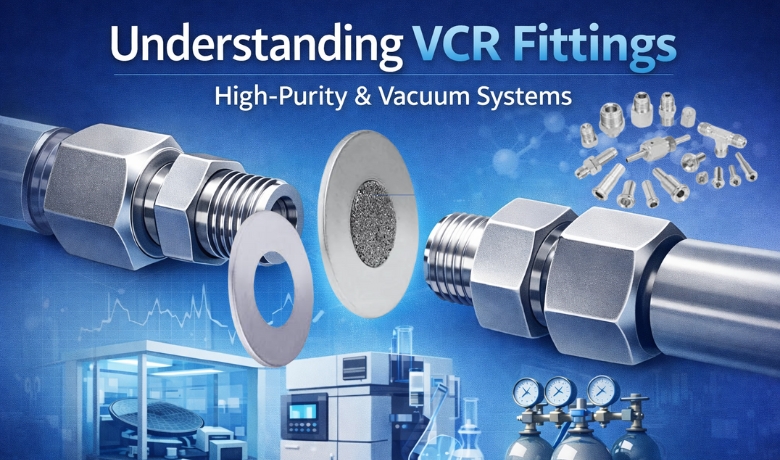
VCR fittings are precision-engineered components widely used in high-purity and vacuum systems.
These specialized fittings are designed to provide leak-free, metal-to-metal seals, making them ideal
for environments where contamination must be minimized, such as semiconductor manufacturing,
laboratory instrumentation, and ultra-high purity (UHP) gas delivery systems.
So In this guide, we will explore everything you need to know about VCR fittings, including what they are,
how they work, the materials used in VCR gaskets, their key applications, and practical tips for selecting
the right components for your system. Whether you are an engineer, technician, or lab professional,
Also this article will help you understand why VCR fittings are essential for maintaining system integrity
and achieving reliable, high-performance operation. Then, let go ahead.
What Does VCR Stand For?
The term VCR in fittings stands for Vacuum Coupling Radiation.
It was originally developed by Swagelok, a leading manufacturer of high-purity and vacuum components,
to provide a reliable, leak-free connection in demanding applications. Despite sharing the same acronym as the
old video cassette recorder, VCR fittings have a completely different purpose—engineered for industrial and
laboratory use rather than entertainment.
VCR fittings are specifically designed to create metal-to-metal seals, which ensure ultra-low leak rates and
compatibility with high-purity gases and vacuum systems. This design makes them ideal for applications where
contamination must be minimized and system integrity is critical.
Ok, After Understanding what VCR stands for helps clarify the engineering behind these fittings and
why they are preferred in industries such as semiconductor manufacturing, cleanroom laboratories,
chromatography systems, and hydrogen or ultra-high-purity gas delivery.
What Is a VCR Fitting?
A VCR fitting is a precision-engineered connector designed to join tubes or pipes in high-purity and vacuum systems
while maintaining an ultra-clean, leak-free seal. Unlike standard fittings that rely on O-rings or threaded connections,
VCR fittings use a metal-to-metal seal with a replaceable gasket, ensuring a reliable and durable connection even under extreme conditions.
Key Features of VCR Fittings
*Metal-to-metal sealing: Provides ultra-low leak rates and eliminates the risk of contamination from elastomeric materials.
*High-pressure and high-temperature resistance: Suitable for demanding industrial and laboratory applications.
*Modular design: Typically includes a male nut, a female body, and a metal gasket for easy assembly and replacement.
*Standardized threads: Compatible with Swagelok VCR and other high-purity tubing systems.
Why VCR Fittings Are Important
VCR fittings are widely used in industries where purity, reliability, and safety are critical:
*Semiconductor manufacturing – delivering ultra-high-purity gases without contamination
*Laboratory instrumentation – preventing leaks in sensitive analytical systems
*Vacuum systems – maintaining tight seals in research and production environments
*Hydrogen or specialty gas systems – handling reactive or corrosive gases safely
In short, VCR fittings are the go-to choice for engineers and technicians who need a robust,
leak-proof solution in high-purity or vacuum-critical applications.
How Does a VCR Seal Work?
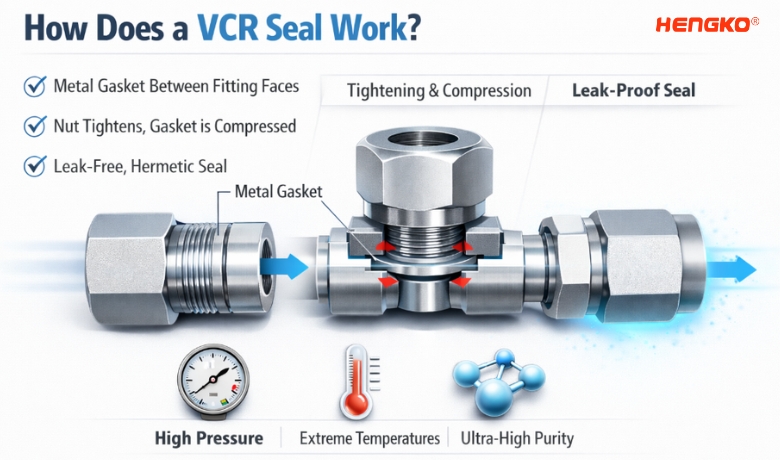
The VCR seal is the heart of a VCR fitting, providing a metal-to-metal leak-free connection that can
withstand high pressure, extreme temperatures, and ultra-high purity requirements. Unlike O-ring or elastomer seals,
VCR fittings rely on a crush seal mechanism, where a thin metal gasket is compressed between the fitting faces to create a perfect seal.
1. Metal-to-Metal Seal Principle
*A metal gasket is placed between the male and female fitting faces.
*As the nut is tightened, the gasket deforms slightly (crushes) to fill any microscopic gaps on the metal surfaces.
*This creates a hermetic, leak-proof seal suitable for vacuum, ultra-pure gas, or corrosive environments.
*The seal is reliable and repeatable, making VCR fittings ideal for critical systems.
2. Components of the Seal System
*Male Nut: Provides the mechanical tightening force to compress the gasket.
*Female Body: Houses the tubing connection and supports the gasket.
*Metal Gasket: Typically made of stainless steel, nickel, or copper depending on application.
*Optional Retainer: Keeps the gasket in place during assembly (used in some designs).
3. Installation Basics
*Proper torque is essential: under-tightening may cause leaks, over-tightening may deform the gasket excessively.
*Always align the fitting faces correctly to prevent damage.
*Gaskets are usually single-use; replace them whenever a connection is disassembled.
4. Why This Seal Is Critical
*Eliminates contamination risks from elastomeric materials.
*Provides ultra-low leak rates (<10⁻¹⁰ atm-cc/sec in high-purity applications).
*Maintains system integrity in vacuum, cleanroom, and high-pressure environments.
A clear understanding of the VCR seal mechanism ensures proper installation and long-term
reliability of your high-purity or vacuum systems.
What Is a VCR Gasket?
A VCR gasket is a critical component of a VCR fitting, responsible for creating a reliable metal-to-metal seal
that ensures leak-free performance in high-purity and vacuum systems.
Positioned between the male and female fitting faces, the gasket is slightly deformed as the fitting is tightened,
forming a hermetic seal capable of withstanding high pressure, extreme temperatures, and ultra-pure gases.
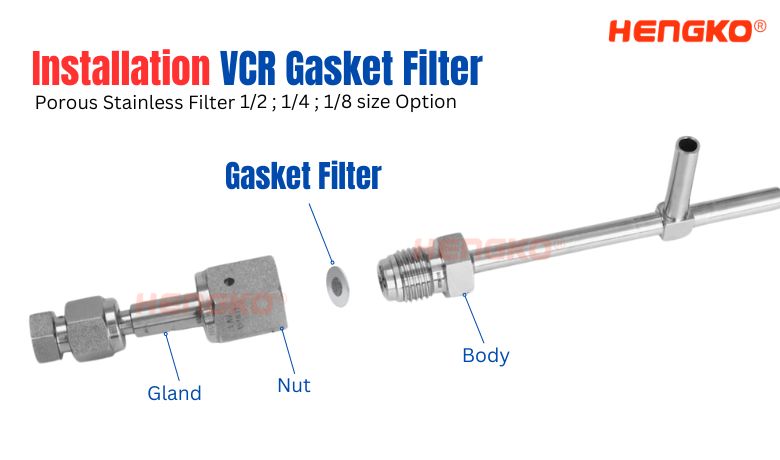
In applications where particulate control is essential, a VCR gasket filter integrates fine filtration directly
into the sealing interface, providing both secure sealing and contamination protection in a single compact solution.
1. Definition and Function
*The gasket is typically a thin metal ring made of stainless steel, nickel, or copper.
*When the fitting is tightened, the gasket “crushes”, filling microscopic gaps and preventing leaks.
*Its main role is to maintain system integrity, ensuring no contamination enters the process.
2. Common VCR Gasket Materials
| Material | Features | Typical Use |
|---|---|---|
| 316L Stainless Steel | Standard, corrosion-resistant | General vacuum & UHP gas systems |
| Nickel | Excellent corrosion resistance | Aggressive chemical environments |
| Copper | Soft, easy to crush | Ultra-high vacuum applications |
| Hastelloy / Monel | High corrosion resistance | Specialty chemical processes |
3. Choosing the Right Gasket
Selecting the appropriate VCR gasket depends on several factors:
*Temperature: Some metals handle high heat better (e.g., nickel, stainless steel).
*Pressure: Ensure the gasket can maintain a seal at your system’s operating pressure.
*Purity Requirements: For ultra-high purity systems, avoid materials that could outgas or contaminate.
*Chemical Compatibility: Use corrosion-resistant metals for aggressive gases.
*Single-use vs Reuse: Most gaskets are single-use; always replace after disassembly.
4. Why the Gasket Matters
Without a properly selected and installed VCR gasket:
*Leaks may occur, risking contamination or system failure.
*Equipment performance can degrade.
*Safety hazards may arise when handling reactive or pressurized gases.
By understanding the function and material options of VCR gaskets, engineers and technicians
can ensure reliable, leak-free operation for high-purity and vacuum systems.
VCR Threads Explained
The threads of a VCR fitting are an essential part of its design, ensuring a secure,
leak-proof connection between tubing or instrumentation components. VCR fittings use standardized
male and female threads that allow precise compression of the metal gasket without the need for sealants or O-rings.
1. Standard VCR Thread Sizes
VCR fittings are available in several common thread sizes, which are chosen based on tubing diameter and flow requirements:
* 1/4 inch (0.25") – Most common for instrumentation and gas lines
* 3/8 inch (0.375") – Medium-sized systems, higher flow rates
* 1/2 inch (0.5") – Larger tubing, high-flow applications
* 3/4 inch (0.75") – Rare, for specialized high-capacity systems
These threads are typically UN/UNF (Unified National Fine), ensuring compatibility across Swagelok and other high-purity fittings.
2. Thread Characteristics
* Right-hand threads: Standard tightening direction
* Precision machined: Ensures proper gasket compression and leak-free performance
* No thread sealants needed: The metal gasket provides the actual seal; threads provide mechanical support
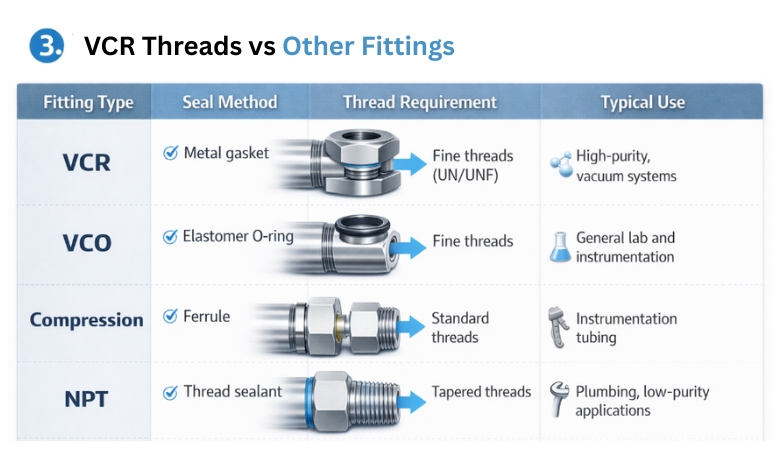
3. VCR Threads vs Other Fittings
| Fitting Type | Seal Method | Thread Requirement | Typical Use |
|---|---|---|---|
| VCR | Metal gasket | Fine threads (UN/UNF) | High-purity, vacuum systems |
| VCO | Elastomer O-ring | Fine threads | General lab and instrumentation |
| Compression | Ferrule | Standard threads | Instrumentation tubing |
| NPT | Thread sealant | Tapered threads | Plumbing, low-purity applications |
4. Why Threads Matter
Proper thread engagement ensures:
*Correct gasket compression for a leak-free seal
*Easy assembly and disassembly without damage
*Compatibility with standardized tubing and equipment
Understanding VCR threads is critical for selecting the right fitting for your system and avoiding
leaks or mechanical failures in high-purity or vacuum applications.
VCR vs Other Fittings: Comparison Table
Understanding how VCR fittings compare to other common tubing and instrumentation connectors
can help engineers select the right component for high-purity, vacuum, or laboratory applications.
The table below summarizes the key differences:
| Fitting Type | Seal Method | Leak Rate | Materials | Typical Uses |
|---|---|---|---|---|
| VCR | Metal gasket (crush seal) | Ultra-low (<10⁻¹⁰ atm-cc/sec) | Stainless steel, nickel, copper | High-purity gas, vacuum systems, semiconductor, chromatography |
| VCO | Elastomer O-ring | Low–medium | Stainless steel, polymer O-ring | Lab instrumentation, gas lines, general vacuum |
| Compression | Ferrule compression | Low | Stainless steel, brass | Instrument tubing, moderate-purity systems |
| NPT | Thread sealant | Medium | Any | Plumbing, low-purity fluid systems, general industrial |
Key Takeaways
*VCR fittings provide the highest purity and leak-free reliability due to their metal-to-metal seal.
*VCO fittings are suitable for less critical applications but rely on elastomeric seals.
*Compression fittings are versatile but may not meet ultra-high purity or vacuum requirements.
*NPT fittings are common in plumbing but not suitable for high-purity or vacuum applications.
This comparison helps system designers quickly identify which fittings meet their performance
and purity requirements, reducing the risk of leaks, contamination, or system failure.
Where Are VCR Fittings Used?
VCR fittings are designed for high-purity, vacuum, and critical gas systems, making them a preferred
choice across multiple industries where reliability, leak-free performance, and contamination control are essential.
1. Semiconductor Manufacturing
*Deliver ultra-high purity (UHP) gases to fabs and process equipment.
*Ensure contamination-free connections in cleanroom environments.
*Common applications: chemical vapor deposition (CVD), photolithography, wafer processing lines.
2. Laboratory Instrumentation
*Used in analytical instruments, such as chromatography systems (HPLC/GC), mass spectrometers, and vacuum chambers.
*Provide reliable, leak-free connections for gases or liquids, maintaining accurate measurements and system integrity.
3. Vacuum Systems
*Essential in research labs, R&D facilities, and industrial vacuum lines.
*Maintain tight seals under high-vacuum conditions where even tiny leaks can compromise processes.
4. Hydrogen and Specialty Gas Systems
*Safely deliver reactive or corrosive gases in industrial and laboratory applications.
*Metal-to-metal seals minimize the risk of leaks, contamination, or hazardous incidents.
5. Other High-Purity Applications
*Pharmaceutical and biotech manufacturing lines
*Fuel cell and hydrogen research
*Ultra-clean chemical transfer systems
VCR fittings are ideal wherever purity, safety, and reliability are critical.
Their metal gasket seal makes them the go-to choice in applications that demand
ultra-low leak rates and consistent performance.
Why VCR Matters Today
VCR fittings remain critical components in modern high-purity and vacuum systems
due to their reliability, leak-free performance, and compatibility with demanding applications.
Even as new technologies emerge, the precision and durability of VCR fittings ensure they are still
widely used in industries where system integrity and contamination control are non-negotiable.
1. Reliability in High-Purity Systems
*The metal-to-metal gasket seal eliminates leaks that could compromise semiconductor fabs, laboratory instruments, and ultra-high purity gas lines.
*Unlike elastomeric seals, VCR fittings maintain long-term stability in extreme temperatures, pressures, and corrosive environments.
2. Essential for Vacuum and UHP Applications
*High-vacuum and ultra-high-purity systems demand fittings that prevent even microscopic leaks.
*VCR fittings provide ultra-low leak rates, ensuring the performance and safety of critical systems
in research, industrial, and cleanroom environments.
3. Supporting Modern Industries
*Semiconductor manufacturing: ensures defect-free gas delivery to production tools
*Pharmaceuticals and biotech: supports sterile, contamination-free processes
*Hydrogen and specialty gas systems: enables safe handling of reactive and corrosive gases
Chromatography and analytical labs: protects sensitive instruments from contamination
4. Why Engineers Prefer VCR Fittings
*Ease of installation with standardized threads
*Consistent, leak-proof connections
*Flexibility to handle different metal gaskets for specific chemical, temperature, or pressure requirements
*Long lifespan and single-use gaskets for critical connections
VCR fittings are not just a legacy component
—they are essential for today’s high-precision, high-purity systems, and will continue to play a vital role in industries
where performance, safety, and contamination control are critical.
FAQs (Frequently Asked Questions about VCR Fittings)
1. What does VCR stand for in fittings?
VCR stands for Vacuum Coupling Radiation. It is a type of precision fitting designed to
provide metal-to-metal, leak-free seals for high-purity and vacuum systems.
VCR fittings are widely used in laboratories, semiconductor manufacturing, and ultra-high purity gas delivery systems.
2. What is a VCR seal?
A VCR seal is a metal gasket placed between the male and female faces of a VCR fitting.
When tightened, the gasket is slightly crushed, creating a hermetic, leak-proof connection
suitable for high-pressure, high-temperature, and ultra-pure environments.
3. What does VCR mean in Swagelok?
In Swagelok fittings, VCR refers to their standardized high-purity fittings that use
metal gaskets for reliable sealing. These are widely recognized for ultra-low leak rates
and compatibility with vacuum, semiconductor, and laboratory systems.
4. What is a VCR thread?
A VCR thread is a precision UN/UNF thread designed to compress the gasket without additional sealants.
VCR threads ensure proper alignment and torque, creating a leak-free metal-to-metal seal in critical systems.
5. Are VCR fittings reusable?
Most VCR fittings themselves can be reused, but the metal gaskets are typically single-use.
Reusing a crushed gasket may compromise the seal and lead to leaks, so always replace the gasket after disassembly.
6. Can you still buy VCR fittings today?
Yes, VCR fittings are widely available from manufacturers like Swagelok,
HOKE, and other high-purity fitting suppliers.
They are essential for modern high-purity, vacuum, and laboratory systems.
7. Why is it called VCR?
The name comes from the original purpose: Vacuum Coupling Radiation, reflecting its design for
vacuum and high-purity gas connections. It is unrelated to video cassette recorders (VCRs),
despite the acronym similarity.
Conclusion
VCR fittings and gaskets provide reliable, leak-free metal-to-metal seals for high-purity,
vacuum, and laboratory systems. Understanding their design, materials, and threads ensures
safe, contamination-free operation in demanding applications.
Explore our VCR fittings and gaskets to find the right solution for your vacuum or high-purity system.
*Browse Products → [https://www.hengko.com/semiconductor-filters/]
*Contact Our Experts today → Get help selecting the best fittings.
Send your message to us:
Post time: Jan-17-2026


