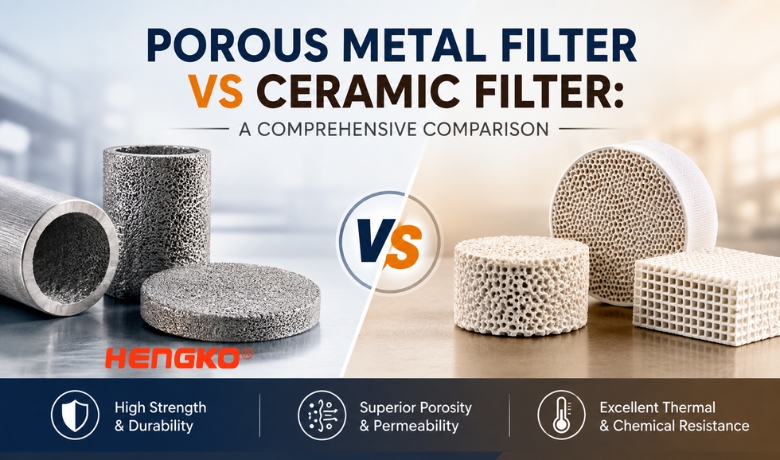
Porous Metal Filter vs Ceramic Filter: A Comprehensive Comparison
This article provides a detailed comparison between porous metal filters and ceramic filters, focusing on their material properties, efficiency, and application suitability in industrial filtration.
Understanding the differences between these two types of filters is crucial for engineers and procurement managers looking to optimize filtration systems in various industrial applications.
Quick Answer: Which Filter is Right for You?
When choosing between porous metal filters and ceramic filters, consider the specific requirements of your application. Porous metal filters are often preferred for their durability and high flow rates, while ceramic filters excel in high-temperature environments and fine filtration.
Ultimately, the right choice will depend on factors such as the nature of the fluid being filtered, operational conditions, and cost considerations.
Decision Summary: Key Takeaways
Key takeaways from this comparison include:
•Porous metal filters offer higher flow rates and durability.
•Ceramic filters provide excellent thermal stability and fine filtration capabilities.
•Cost and application-specific requirements are critical in making the final decision.
Who Should Read This?
This article is intended for:
•Process engineers seeking to optimize filtration systems.
•Quality engineers focused on material performance and compliance.
•Procurement managers evaluating cost-effectiveness and supplier options.
•Technical buyers needing detailed specifications for decision-making.
•System integrators looking for compatibility with existing systems.
Why This Comparison Matters
Choosing the right filter is essential for ensuring efficient operation in industrial applications. The performance of filtration systems directly impacts product quality, operational efficiency, and compliance with industry standards.
Understanding the differences between porous metal and ceramic filters can help organizations avoid costly mistakes and optimize their filtration processes.
Core Technology: Understanding Filter Mechanisms
Porous metal filters utilize a network of interconnected pores that allow for high flow rates while maintaining structural integrity. These filters are typically made from materials like stainless steel, which provides excellent durability and resistance to corrosion.
Ceramic filters, on the other hand, are composed of sintered ceramic materials that offer superior thermal stability and fine filtration capabilities. They are particularly effective in high-temperature applications and can filter out very small particles.
Decision Matrix: Evaluating Filter Options
| Feature | Porous Metal Filter | Ceramic Filter |
|---|---|---|
| Flow Rate | High | Moderate |
| Temperature Resistance | Moderate | High |
| Filtration Precision | Moderate | High |
| Durability | High | Moderate |
| Cost | Higher | Lower |
Comparison Table: Porous Metal vs Ceramic Filters
| Specification | Porous Metal Filter | Ceramic Filter |
|---|---|---|
| Material | Stainless Steel | Sintered Ceramic |
| Max Operating Temperature | Depends on product design | Higher than porous metal |
| Filtration Efficiency | Moderate | High |
| Maintenance Requirements | Lower | Higher |
| Typical Applications | Oil and gas, chemical processing | Food and beverage, pharmaceuticals |
Engineering insight
Engineering Insights: Material Properties and Performance
Porous metal filters are known for their strength and resistance to mechanical stress, making them suitable for demanding applications. However, their performance can be affected by the nature of the fluid being filtered.
Ceramic filters, while offering excellent filtration precision, may be more susceptible to cracking under mechanical stress. Therefore, careful consideration of the application environment is essential.
Important: Always confirm material compatibility with the specific application to ensure optimal performance.
Procurement insight
Procurement Insights: Cost and Supplier Considerations
When procuring filters, it is essential to consider not only the initial cost but also the long-term operational costs associated with maintenance and replacement. Porous metal filters may have a higher upfront cost but can offer lower maintenance costs over time.
Additionally, evaluating supplier reliability and support is crucial in ensuring a smooth procurement process.
Manufacturer / quality
Manufacturer Insights: Choosing the Right Supplier
Selecting a reputable manufacturer is critical for ensuring the quality and reliability of filters. Look for manufacturers with a proven track record in the industry and those who provide detailed product specifications and support.
Consider manufacturers who offer comprehensive testing and validation of their products to ensure compliance with industry standards.
Sales / business insight
Sales Insights: Understanding Market Trends
The market for filtration technologies is evolving, with increasing demand for high-efficiency filters that can operate under extreme conditions. Manufacturers are focusing on developing advanced materials and technologies to meet these demands.
Staying informed about market trends can help organizations make strategic decisions regarding filter selection and procurement.
Manufacturer / quality
Quality Insights: Ensuring Compliance and Performance
Quality assurance is paramount when selecting filters for industrial applications. Ensure that the filters meet relevant industry standards and certifications to guarantee performance and reliability.
Regular testing and validation of filters can help maintain compliance and ensure optimal performance throughout their operational life.
Sales / business insight
Business Insights: Impact on Operational Efficiency
The choice of filter can significantly impact operational efficiency and product quality. Filters that are not suited for the application can lead to increased downtime, higher maintenance costs, and compromised product quality.
Investing in the right filtration technology can enhance overall operational efficiency and contribute to long-term cost savings.
RFQ Checklist: What to Include When Requesting Quotes
When requesting quotes for filters, consider including the following:
1.Detailed specifications of the required filter type.
2.Operating conditions and fluid characteristics.
3.Expected flow rates and filtration efficiency requirements.
4.Maintenance and replacement schedules.
5.Compliance and certification requirements.
Supplier Checklist: Evaluating Potential Suppliers
To evaluate potential filter suppliers, consider the following criteria:
1.Reputation and experience in the industry.
2.Quality assurance processes and certifications.
3.Technical support and customer service.
4.Product range and customization options.
5.Pricing and delivery terms.
When Not to Choose: Limitations of Each Filter Type
Important: While porous metal filters are robust, they may not be suitable for applications requiring fine filtration or extreme temperature resistance. Conversely, ceramic filters, although excellent for high-precision applications, may not withstand high mechanical stress.
Assessing the specific requirements of your application is crucial to avoid selecting a filter that does not meet operational needs.
Common Mistakes: Avoiding Pitfalls in Filter Selection
Common mistakes in filter selection include:
•Not considering the specific application requirements.
•Overlooking maintenance and operational costs.
•Failing to verify material compatibility.
•Ignoring supplier reliability and support.
Takeaway: Thoroughly evaluate all aspects of filter selection to avoid costly errors.
Frequently Asked Questions
What are the main differences between porous metal and ceramic filters?
Porous metal filters are known for their durability and high flow rates, while ceramic filters excel in fine filtration and high-temperature applications.
Which filter type is more cost-effective?
The cost-effectiveness of each filter type depends on the specific application and long-term operational costs, including maintenance and replacement.
How do I choose the right filter for my application?
Consider factors such as fluid characteristics, required flow rates, and operational conditions when selecting a filter.
Request More Information
For more detailed information on porous metal and ceramic filters, including specifications and case studies, please reach out to HENGKO. Our team is ready to assist you in making the best choice for your filtration needs.
Post time: Aug-06-2026


