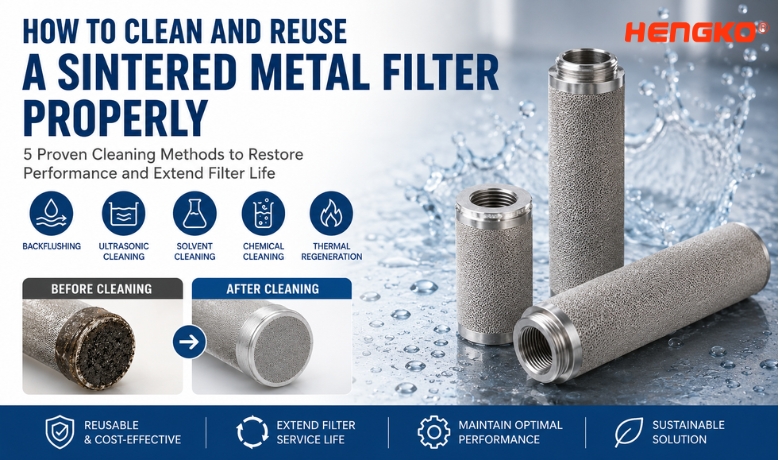
Sintered metal filters can be cleaned and reused many times when the correct maintenance methods are applied.
Depending on the type of contamination, common cleaning techniques include:
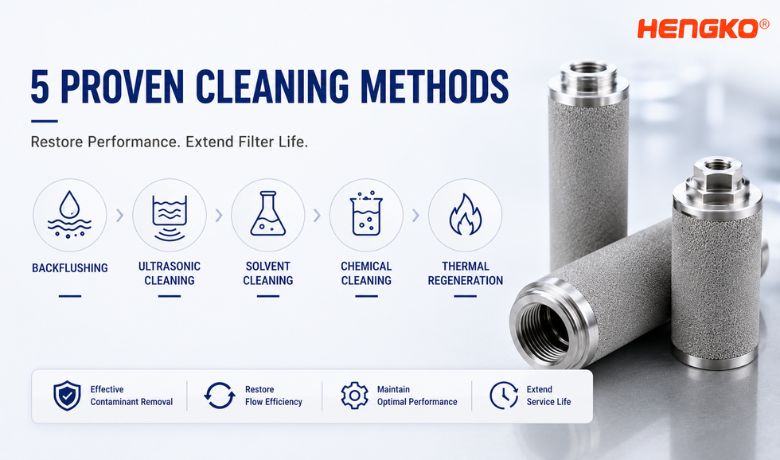
- Backflushing
- Ultrasonic cleaning
- Solvent cleaning
- Chemical cleaning
- Thermal regeneration
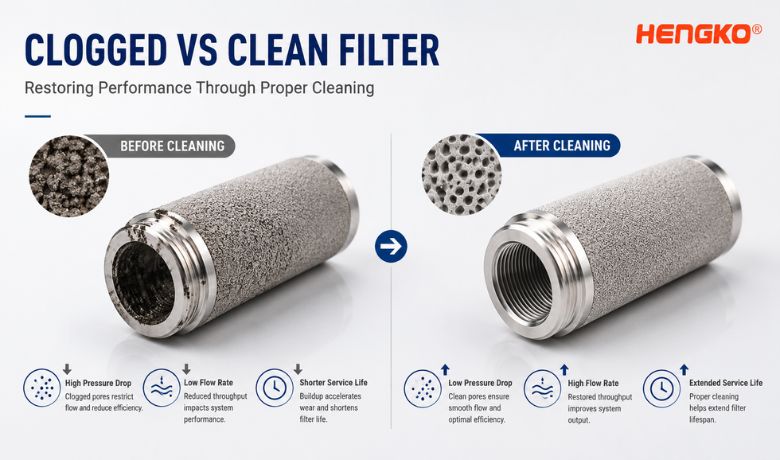
Regular cleaning helps restore flow performance, reduce pressure drop, extend service life, and lower replacement costs.
In this guide, we'll explain how to identify filter fouling, select the most effective cleaning method, and safely regenerate sintered metal filters for long-term, reliable operation.
Why Sintered Metal Filters Can Be Reused
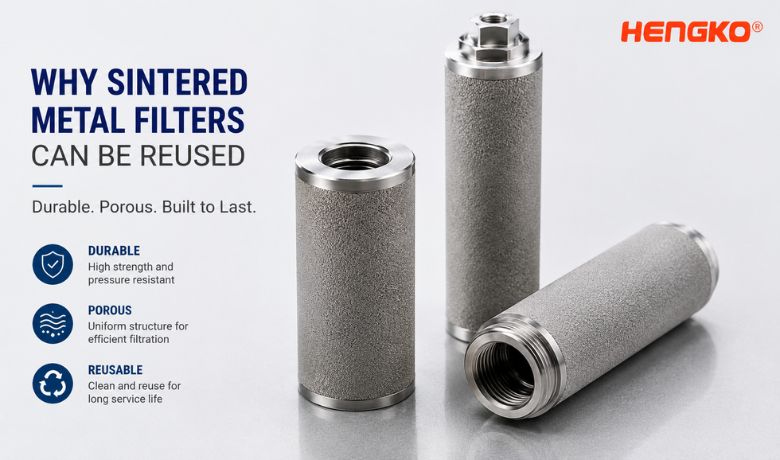
Sintered metal filters are designed for repeated cleaning and reuse.
Their rigid porous structure provides excellent mechanical strength and resists high temperatures, pressure, and corrosion. Unlike disposable filter elements, contaminants are trapped within the interconnected pores and can often be removed through proper cleaning methods without damaging the filter media.
With routine maintenance, sintered metal filters can deliver consistent filtration performance over many cleaning cycles, reducing replacement costs and extending equipment uptime.
When Does a Sintered Metal Filter Need Cleaning?
A sintered metal filter should be cleaned when contaminants begin to restrict flow through the porous media.
Common signs include:
- An increase in pressure drop
- Reduced flow rate
- Uneven gas or liquid distribution
- A noticeable decline in filtration performance
In some applications, visible fouling, discoloration, or residue buildup on the filter surface may also indicate that cleaning is required.
Cleaning the filter before severe blockage occurs helps maintain optimal performance, reduces energy consumption, and extends the service life of the filter element.
5-Proven Cleaning Methods to Restore Performance and Extend Filter Life
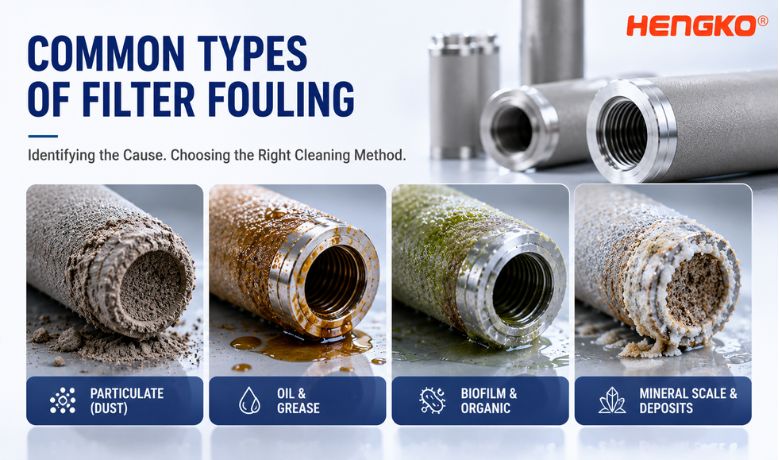
Selecting the right cleaning method starts with identifying the type of contamination. Sintered metal filters may become clogged by solid particles, oils and greases, biological residues, or mineral deposits, depending on the application. Each contaminant interacts differently with the porous structure and may require a specific cleaning approach for effective removal.
Understanding the source of fouling helps restore filtration performance more efficiently while minimizing the risk of damage to the filter element.
Method 1: Backflushing
Backflushing is often the first and simplest method for cleaning a sintered metal filter. By reversing the flow direction, trapped particles can be dislodged and flushed out of the porous structure. This method is particularly effective for removing dust, powders, and other loose contaminants before they become deeply embedded in the filter media.
For best results, use clean compressed air, nitrogen, or a compatible process fluid to flush the filter in the reverse direction of normal operation. Regular backflushing can help maintain flow performance, reduce pressure drop, and extend the interval between more intensive cleaning procedures.
Method 2: Ultrasonic Cleaning
Ultrasonic cleaning is highly effective for removing fine particles and contaminants trapped deep within the porous structure of a sintered metal filter. High-frequency sound waves create microscopic cavitation bubbles in the cleaning solution, helping dislodge debris that cannot be removed by backflushing alone.
To clean the filter, immerse it in a suitable cleaning solution and place it in an ultrasonic cleaner for 15–30 minutes. After cleaning, thoroughly rinse the filter with clean water or a compatible solvent and allow it to dry completely before reuse. Ultrasonic cleaning is often recommended for restoring flow performance and extending filter service life.
Method 3: Solvent Cleaning
Solvent cleaning is recommended when a sintered metal filter is contaminated with oils, greases, polymers, or other organic residues. These contaminants can block the pores and reduce filtration efficiency, making them difficult to remove through backflushing or water-based cleaning alone.
For effective cleaning, soak the filter in a compatible solvent such as isopropyl alcohol, ethanol, or acetone, depending on the type of contamination and filter material. After soaking, rinse the filter thoroughly and allow it to dry completely before returning it to service. Always verify chemical compatibility to avoid damaging the filter or introducing unwanted contaminants into the process.
Method 4: Chemical Cleaning
Chemical cleaning is commonly used to remove stubborn contaminants such as mineral scale, salt deposits, oxidation residues, and biological fouling that cannot be effectively removed by physical cleaning methods alone. When properly applied, chemical cleaning can restore permeability and improve overall filter performance.
Depending on the type of fouling and filter material, suitable cleaning agents may include:
- Diluted acids
- Alkaline solutions
- Specialized cleaning chemicals
After treatment, the filter should be thoroughly rinsed with clean water to remove any residual chemicals before being returned to service. Always follow recommended concentration levels, exposure times, and material compatibility guidelines to ensure safe and effective cleaning.
Method 5: Thermal Regeneration
Thermal regeneration is an effective cleaning method for removing carbon deposits, organic residues, and other combustible contaminants from sintered metal filters. By heating the filter under controlled conditions, accumulated contaminants can be decomposed or burned off, helping restore flow capacity and filtration performance.
The appropriate temperature and treatment time depend on the filter material and the type of contamination. Care should be taken to avoid excessive temperatures that may affect the filter's structure or material properties. Thermal regeneration is often used as part of a comprehensive maintenance program for heavily fouled filters operating in demanding industrial environments.
Recommended Cleaning Method by Contaminant Type
The most effective cleaning method depends on the type and severity of contamination.
Selecting the appropriate cleaning approach can improve cleaning efficiency, reduce maintenance time, and help preserve the integrity of the filter element. In some cases, a combination of cleaning methods may be required to fully restore filter performance.
| Contaminant Type | Recommended Cleaning Method |
|---|---|
| Dust & Loose Particles | Backflushing |
| Fine Particles | Ultrasonic Cleaning |
| Oils & Grease | Solvent Cleaning |
| Mineral Scale & Salt Deposits | Chemical Cleaning |
| Carbon & Organic Residues | Thermal Regeneration |
| Mixed or Heavy Fouling | Combined Cleaning Methods |
If the contamination type is unknown, start with the least aggressive cleaning method and gradually proceed to more intensive techniques as needed.
This approach helps minimize the risk of damaging the filter while achieving effective cleaning results.
How to Verify the Filter Is Clean
After cleaning, it is important to verify that the filter has been properly regenerated before returning it to service. A successful cleaning process should restore flow performance, reduce pressure drop, and remove visible contaminants from the filter surface.
Common verification methods include:
- Measuring flow rate
- Monitoring pressure drop across the filter
- Conducting visual inspections for any remaining residue or fouling
For critical applications, additional tests such as bubble point testing or permeability testing may be performed to confirm that the porous structure remains open and functional. Proper verification helps ensure consistent filtration performance and prevents unexpected process interruptions.
Common Cleaning Mistakes to Avoid
While sintered metal filters are highly durable, improper cleaning practices can reduce their performance and shorten their service life. Avoiding common mistakes helps maintain the integrity of the porous structure and ensures reliable filtration results.
Common errors include:
- Using incompatible chemicals
- Applying excessive pressure during backflushing
- Aggressively scrubbing the filter surface
- Failing to thoroughly rinse and dry the filter after cleaning
These practices may lead to corrosion, pore blockage, or reduced permeability. Following recommended cleaning procedures and material compatibility guidelines will help maximize filter longevity and maintain consistent performance.
How Many Times Can a Sintered Metal Filter Be Reused?
The service life of a sintered metal filter depends on several factors, including:
- The filter material
- Operating conditions
- Contaminant type
- Cleaning method
- Maintenance frequency
Unlike disposable filters, sintered metal filters are designed for repeated regeneration and can often be reused many times when properly maintained.
In most industrial applications, a well-maintained sintered metal filter can provide years of reliable service. Regular monitoring, timely cleaning, and proper handling are essential to maximizing filter lifespan and maintaining consistent filtration performance. When signs of structural damage, excessive corrosion, or irreversible pore blockage are observed, filter replacement should be considered.
Best Practices for Extending Filter Service Life
Proper maintenance is the key to maximizing the lifespan and performance of a sintered metal filter. Regularly monitoring pressure drop and flow rate can help identify fouling before it becomes severe, allowing for timely cleaning and regeneration.
To achieve the best results, use cleaning methods that are appropriate for the type of contamination, avoid excessive mechanical or chemical stress, and ensure the filter is thoroughly rinsed and dried before reuse. In demanding applications, installing a pre-filter can help reduce contaminant loading and extend cleaning intervals. Proper storage in a clean, dry environment also helps protect the filter from unnecessary contamination and corrosion when not in service.
FAQs
Can a sintered metal filter be cleaned and reused?
Yes. Sintered metal filters are designed for repeated cleaning and reuse.
When properly maintained, they can deliver reliable filtration performance over many cleaning cycles.
What is the best way to clean a clogged sintered metal filter?
The best cleaning method depends on the type of contamination.
Common methods include:
- Backflushing
- Ultrasonic cleaning
- Solvent cleaning
- Chemical cleaning
- Thermal regeneration
How often should a sintered metal filter be cleaned?
Cleaning frequency depends on operating conditions, contaminant loading, and pressure drop.
Filters should be cleaned whenever performance begins to decline or pressure drop increases significantly.
Can ultrasonic cleaning damage a sintered metal filter?
No. When performed correctly, ultrasonic cleaning is a safe and effective method for removing contaminants trapped within the porous structure of a sintered metal filter.
What contaminants can be removed from a sintered metal filter?
Sintered metal filters can be cleaned of dust, fine particles, oils, grease, organic residues, mineral deposits, and other common process contaminants using appropriate cleaning methods.
How long does a sintered metal filter last?
The lifespan of a sintered metal filter depends on factors such as operating conditions, contaminant type, cleaning frequency, and filter material. With proper maintenance and regular cleaning, sintered metal filters can provide reliable performance for many years, making them a cost-effective alternative to disposable filter media.
What cleaning chemicals are safe for stainless steel sintered filters?
Common cleaning chemicals for stainless steel sintered filters include:
- Isopropyl alcohol (IPA)
- Ethanol
- Acetone
- Citric acid
- Nitric acid
- Diluted alkaline cleaning solutions
The appropriate chemical depends on the type of contamination and the filter material. Always verify chemical compatibility and follow the manufacturer's recommendations before cleaning.
Conclusion
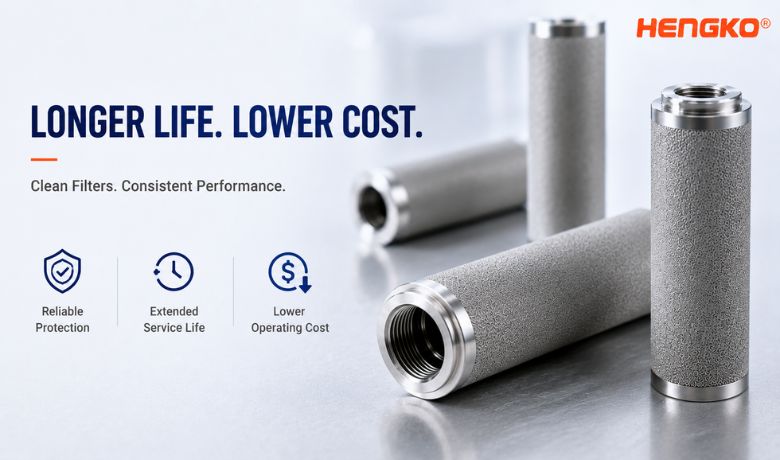
Sintered metal filters can be cleaned and reused many times when properly maintained. By selecting the right cleaning method and performing regular maintenance, users can restore filtration performance, extend service life, and reduce operating costs.
If you need help selecting, cleaning, or customizing a sintered metal filter, contact HENGKO for expert support and tailored filtration solutions.
Post time: May-29-2026


